

Article: What Is Leather Patina, and Why It Is a Good Thing

What Is Leather Patina, and Why It Is a Good Thing
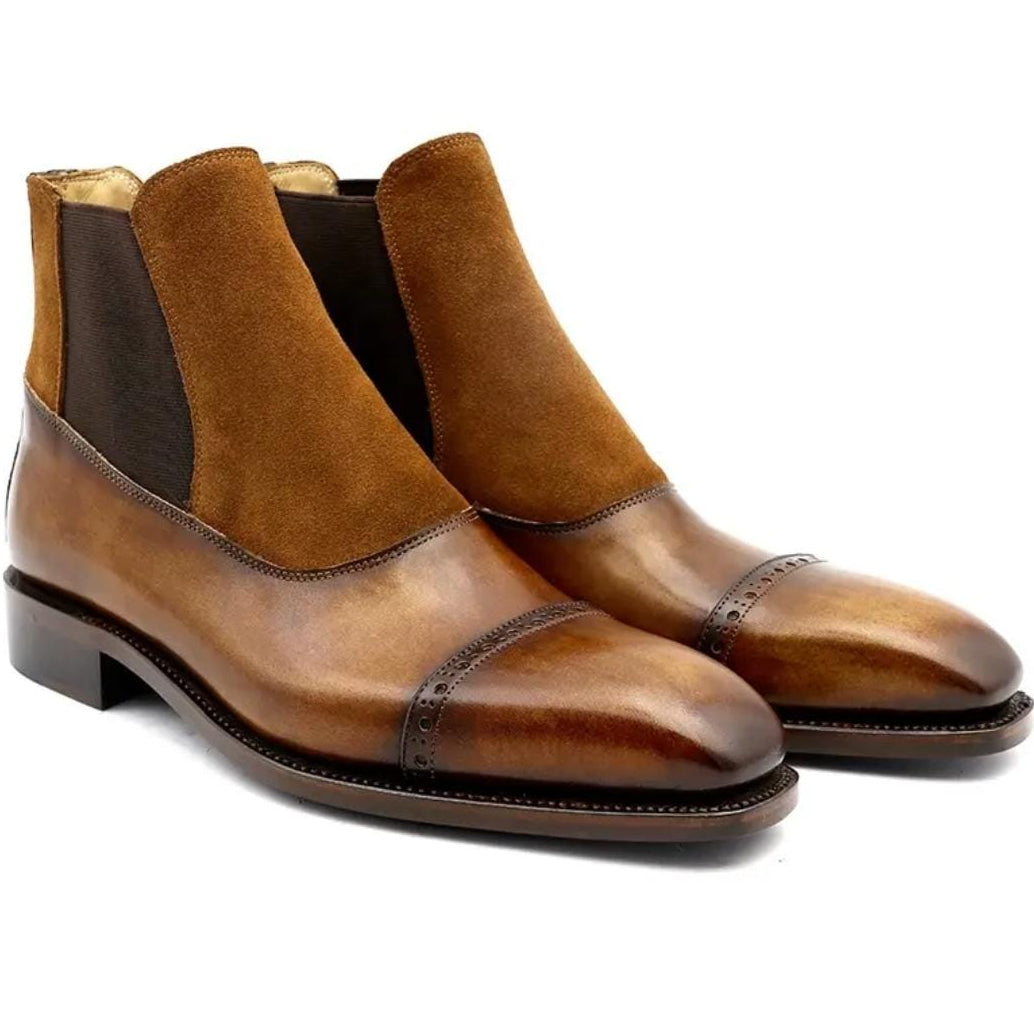
Open a well-worn pair of leather shoes and you will notice something a brand-new pair does not have: depth. Lighter tones at the creases and toe, darker tones where the leather has been handled less, a slight sheen where it has caught the light for years. That effect is called patina, and it is one of the things that separates leather from almost every other material used to make shoes.
Patina is not damage, and it is not something to polish away. It is proof that a pair of shoes has been worn, cared for and lived in. Here is what it actually is, how it develops, and how to tell the difference between good patina and simple wear and tear.
What patina actually is
Leather is a natural material, and its surface reacts to light, air, oils and handling over time. Patina is the gradual change in colour and sheen that results from this: a slow build-up of tone that no two pairs develop in quite the same way, because no two pairs are worn, stored and cared for identically.
It happens in two ways. Some patina finishes are applied by hand at the time of manufacture, using stains and burnishing techniques that mimic the look of years of wear from day one. Other patina develops naturally, purely through wear, polishing and time.
Hand-burnished and patina finishes
A number of our styles are finished with a patina effect from the workshop, so the depth of colour is built in rather than earned over months. The Camden Patina Chelsea Boots are a good example, with a tan-to-brown patina layered by hand across the leather vamp for an instantly rich, lived-in look. The Valenor Ocean Patina takes the same idea further, with a hand-applied ocean-teal patina that shifts between green and blue depending on the light.
The effect also appears in more traditional formal styles. The Burnished Edge Wholecut Oxford Shoes carry a hand-finished patina along a seamless wholecut upper, and The Siena Brush-Off Monk uses a brush-off leather with its own hand-finished patina for a distinguished, slightly weathered look straight out of the box. The Verona Woven Double Monk is finished in a rich chestnut patina across its handwoven leather panels.
How patina develops naturally, with wear
Beyond finishes applied at the workshop, leather that starts out plain will still change with use. Oils from your feet, exposure to light, regular polishing and simple flexing as you walk all gradually alter the surface. The Firenze Double Monk, finished in a deep mahogany, is designed to develop its own unique patina over time, so the pair you own in a few years will look subtly different from the pair you bought, and different again from anyone else's.
This is part of what makes leather shoes worth the investment. A good pair does not simply wear out. It changes, and for most people, it improves.
Encouraging good patina, and avoiding bad wear
Good patina develops evenly, through regular wear, cleaning and conditioning. A few habits help it along:
- Wear shoes in rotation so no single pair takes all the wear, and moisture has time to release between wears.
- Clean and condition periodically rather than leaving leather to dry out. Conditioning keeps the surface supple, which is what allows an even patina to build rather than cracking or patchy discolouration.
- Avoid prolonged exposure to direct sunlight and excessive heat, both of which can fade or dry leather unevenly rather than ageing it gracefully.
- Keep leather away from prolonged rain, since repeated soaking and drying is one of the more common causes of patchy, uneven wear rather than genuine patina.
Bad wear tends to look patchy, cracked or dry, usually because the leather was left dirty, wet or exposed to heat for long periods. Good patina, by contrast, looks even and deepens gradually across the whole surface.
Natural variation is not a defect
Before patina even begins, full-grain leather already carries natural marks, wrinkles and grain variation from the hide itself. These are characteristics of genuine leather, not flaws, and slight colour variation between batches is also natural in handcrafted footwear. The Onyx Sovereign Deep-Grain Leather Boots show this clearly, with a visible, textured grain across the upper that adds depth rather than detracting from it.
If you are new to full-grain leather, it helps to expect this kind of variation rather than a perfectly uniform, machine-smooth finish. It is, in fact, one of the clearest signs that you are wearing genuine leather rather than a synthetic alternative.
Caring for the leather beneath the patina
Every FRONK ROYALE pair is handcrafted in India from premium A-grade leather, and our 10-month warranty covers defects in workmanship and materials. That said, the leather itself needs regular care to avoid drying out and cracking, whatever finish it carries. A short break-in period when the shoes are new, worn for a few hours a day and built up over one to two weeks, also helps the leather settle and begin ageing evenly from the start.
Read more

Building a Five-Day Office Shoe Rotation for Men
A practical Monday-to-Friday shoe rotation for the office, and why giving leather time to rest makes it last longer.
Read more